Quick answer
QuietOn 4 uses active noise cancelling (ANC) to reduce sound at the source, with no Bluetooth and no audio — built for real quiet. Ozlo Sleepbuds combine passive isolation with streaming audio or soundscapes to mask sound instead. If snoring or a low, steady rumble is what’s keeping you up, QuietOn 4’s ANC is built specifically for that. If you like falling asleep to sound, Ozlo’s approach may suit you better.
If you’ve been comparing noise-cancelling sleep earbuds, QuietOn 4 and Ozlo Sleepbuds have probably both shown up in your research. They get grouped together often, but they’re built around two different ideas of what a quiet night should sound like.
One reduces noise. The other softens it and gives you something else to listen to instead. Neither approach is “better” in the abstract; it depends on what’s keeping you awake, and what you actually want in your ears at 2 a.m.
Here’s a clear breakdown of how the two compare, so you can figure out which one matches your situation.
The Core Difference: Cancelling Noise vs. Covering It
This is the part that gets lost in a lot of comparison content, so it’s worth being precise about it.
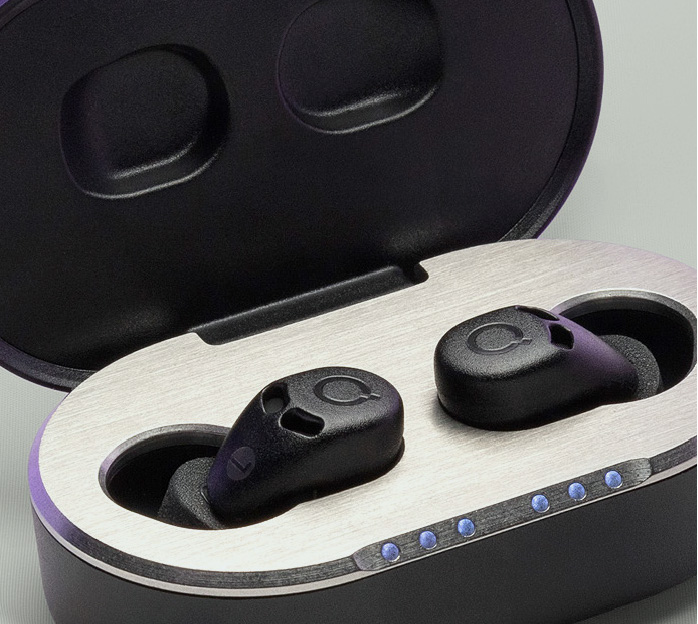
QuietOn 4 uses active noise cancelling (ANC). It generates an inverse sound wave that reduces incoming noise at the source, which is particularly effective against low-frequency, continuous sounds like snoring, HVAC hum, and traffic rumble. There’s no Bluetooth, no app, and no audio playback. You put them in, and they get to work on the sound already in the room. (See how the technology works for the full explanation.)
Ozlo Sleepbuds are built around passive isolation plus audio. They fit snugly to physically block some sound, then add streaming audio, white noise, or soundscapes to mask what gets through. The experience is closer to falling asleep with a podcast or a rain sound playing, but the underlying noise is still there, it’s just competing with something else.
That’s the real dividing line: cancellation vs. masking. It’s also the source of a lot of the confusion online, since general “sleep earbud” content often lumps ANC and masking earbuds into one category without distinguishing which approach actually solves which problem.
| QuietOn 4 | Ozlo Sleepbuds | |
| Core approach | Active noise cancelling | Passive isolation + audio masking |
| Bluetooth / app required | No | Yes |
| Plays audio (music, soundscapes) | No | Yes |
| Best suited for | Snoring, traffic, low-frequency rumble | Falling asleep to sound or music |
| Setup | None: just insert and go | App pairing and sound selection |
(Battery life and pricing vary by retailer and change over time — check current specs on each brand’s product page before comparing.)
Is ANC or White Noise Better for Sleep Noise Like Snoring?
This is one of the most common points of confusion when people compare sleep earbuds, so it’s worth answering directly: for low, continuous noise (specifically snoring) active noise cancelling is the more targeted tool, because it works on the sound itself rather than adding a second sound on top of it.
White noise and masking are genuinely useful for general background hiss or for people who like something playing while they fall asleep. But snoring is a specific, low-frequency, continuous noise problem, and ANC is built to reduce exactly that frequency range at the source. Treating “ANC vs. white noise” as a general either/or question misses that the two approaches are suited to different problems: ANC for a specific, identifiable low-frequency noise like snoring or HVAC hum; masking for people who want a substitute sound rather than silence. For a snoring partner specifically, that makes ANC the more direct fit: not just for travel, but for home, every night.
Where This Matters Most: Snoring and Low-Frequency Noise
Foam earplugs and passive isolation struggle with one specific type of noise: the low, rumbling frequencies that make up a large share of snoring, traffic, and mechanical hum. Snoring isn’t just an annoyance: research measuring real bed-partner noise exposure has found that snoring intensity regularly exceeds recognized noise-pollution thresholds.
This is exactly the gap active noise cancelling is designed to close. QuietOn’s ANC targets that low-frequency band directly, which is why it’s specifically built for:
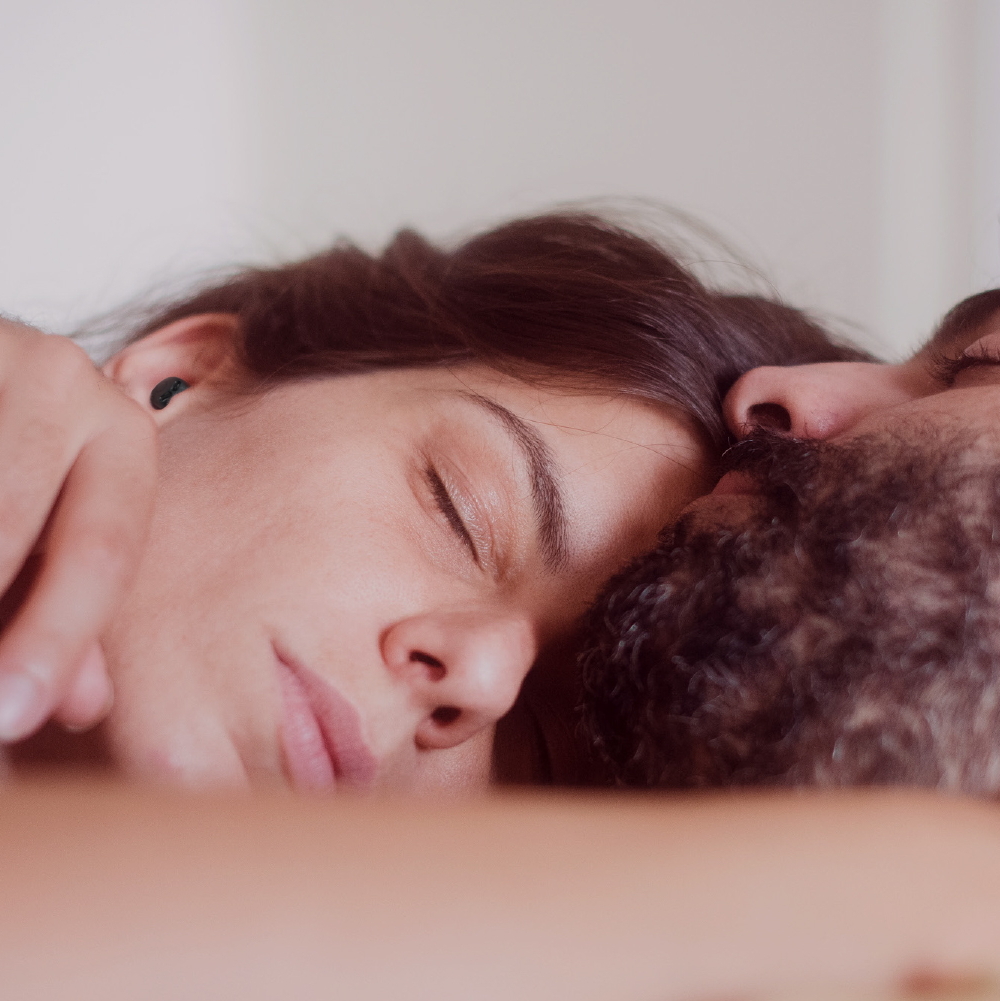
- Sleeping next to a snoring partner
- Light sleepers disturbed by background noise
- Urban environments with persistent traffic or ambient sound
- Side sleepers who find bulkier earbuds uncomfortable
If snoring or a low, steady rumble is your specific problem, this is exactly where active noise cancelling is designed to help because it addresses the noise itself, rather than adding a competing sound on top of it.
Where Ozlo’s Approach Makes Sense
To be fair to the other side of this: masking has a real use case too. If you like falling asleep with a podcast, a sleep story, white noise, or ambient music, that’s simply not something QuietOn 4 is built to do. It has no Bluetooth and no audio playback by design. Ozlo’s audio-first approach suits people who want that experience and don’t mind (or actively want) something playing in their ears through the night.
It’s a genuine tradeoff, not a flaw on either side. QuietOn 4 is built for quiet. Ozlo is built for a soundtrack. Which one you want depends on how you actually like to fall asleep.
How to Sleep When Your Partner Snores
If a snoring partner is the specific problem you’re solving for, it helps to know what actually works and why. Snoring is largely a low-frequency phenomenon, and general reference material on snoring grades notes that simple snoring is typically concentrated well under 300 Hz. That’s why the best solution for sleeping next to a snorer usually isn’t “block everything”, it’s targeting that specific frequency range.
QuietOn 4’s active noise cancelling is built around exactly this problem. See the full QuietOn 4 spec sheet if snoring or low, continuous noise is what’s keeping you up, or check the comfort and fit FAQ if you’re also weighing all-night wearability.
Comfort and Wearability
Side sleepers face a specific problem: most earbuds, especially anything Bluetooth-enabled with internal electronics, are simply too bulky to wear comfortably with your ear pressed into a pillow.
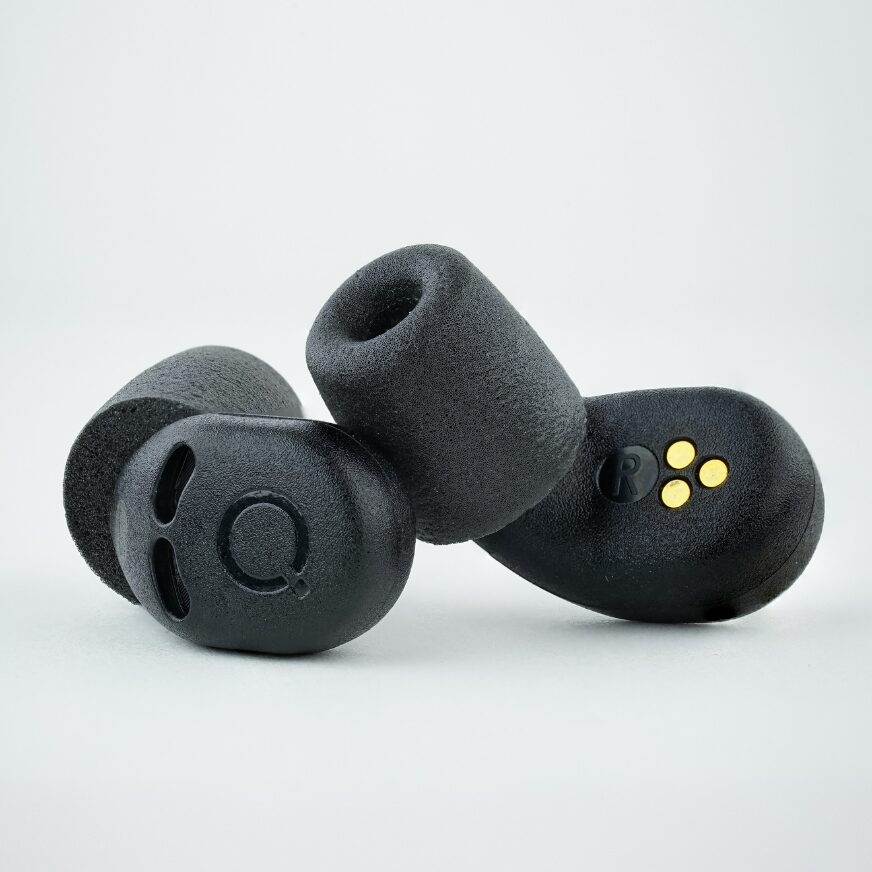
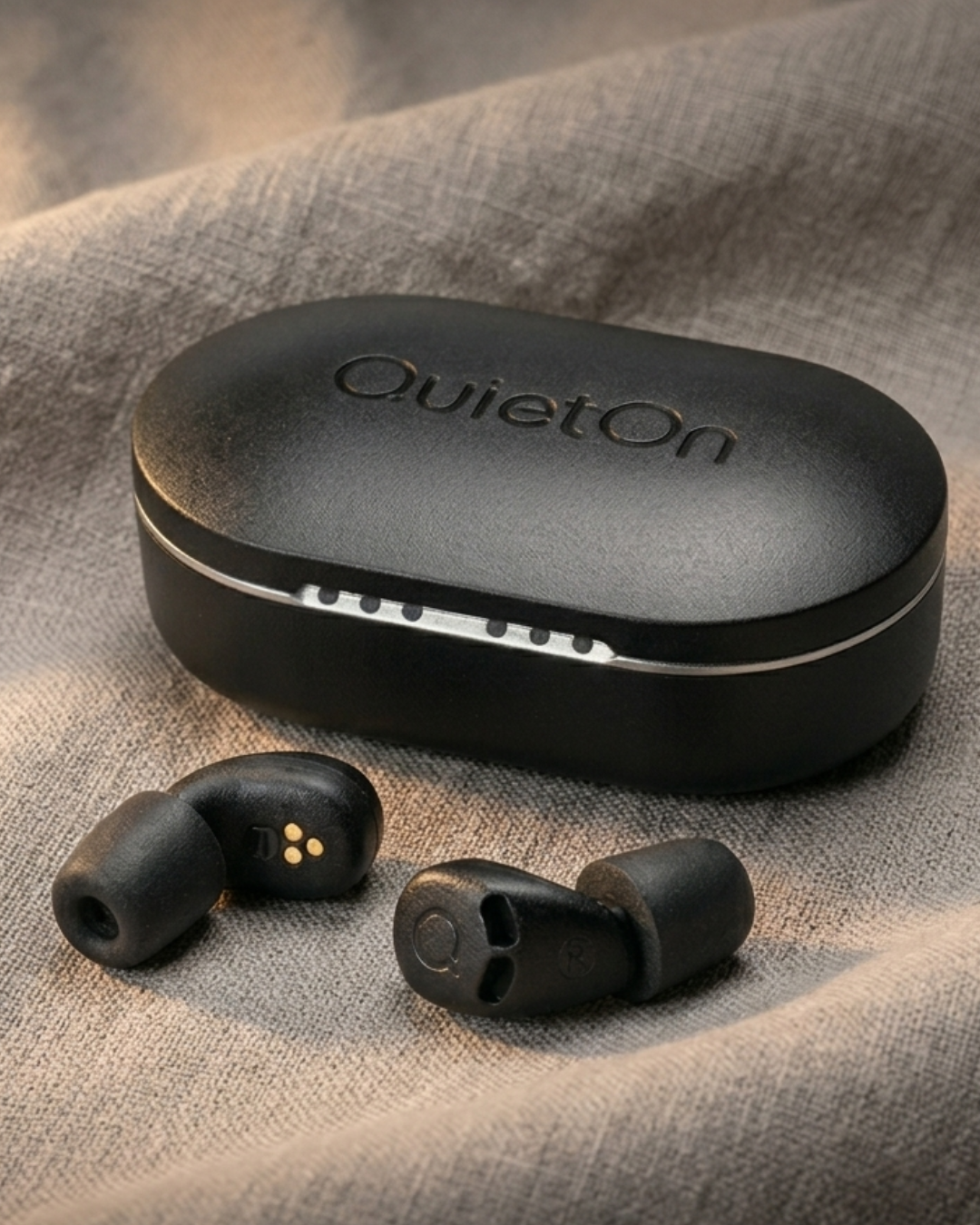
QuietOn 4 is one of the smallest ANC sleep earbuds available, designed specifically so it doesn’t press painfully against the pillow. That size difference isn’t cosmetic; it’s the reason many side sleepers who’ve tried bulkier ANC or Bluetooth earbuds and given up end up looking at dedicated, comfortable sleep earbuds instead. (More detail in the comfort and fit FAQ.)
Ozlo Sleepbuds are also designed with sleep comfort in mind, with a low-profile shape intended to work well for side-sleeping. Comfort here often comes down to individual ear shape and personal preference, so it’s worth checking return policies on both before committing.
Setup and Simplicity
QuietOn 4 requires no Bluetooth, no app, and no pairing. You take them out of the case, put them in, and the ANC starts working immediately — see the full setup process. For anyone who wants to remove noise (and complexity) from their bedtime routine entirely, that simplicity is part of the product, not an afterthought.
Ozlo’s audio features mean pairing with a phone or app to select sounds, manage playback, and adjust settings. A small extra step, but one worth knowing about if you want the simplest possible nightly routine.
Battery Life for Overnight Use
Whichever earbud you’re considering, check the number that actually matters: ANC-only battery life, not total playback hours. Sleep earbuds need to perform reliably across a full 7–8 hour night, and that’s a different demand than a couple of hours of daytime listening. It’s one of the most commonly overlooked specs when comparing sleep earbuds, so it’s worth checking directly on each product page rather than assuming.
So Which One Should You Choose?
Choose QuietOn 4 if:
- Your main disruption is snoring, traffic, or another low, continuous noise
- You want quiet, not a substitute sound
- You’re a side sleeper who’s found bulkier earbuds uncomfortable
- You want something you can put in without pairing an app
Consider Ozlo Sleepbuds if:
- You like falling asleep to music, podcasts, or soundscapes
- Masking sound is part of your ideal bedtime routine
- You’re comfortable with an app-based setup
Neither product is trying to be the other. QuietOn 4 reduces the noise. Ozlo gives you something new to listen to instead. The right choice comes down to how you actually want your bedroom to sound.
FAQ
Do noise-cancelling earbuds work for snoring?
Active noise cancelling is specifically effective against low-frequency, continuous sounds, which is exactly the frequency range most snoring falls into. This is different from general-purpose ANC earbuds designed for travel or commuting; dedicated sleep ANC earbuds like QuietOn 4 are built around this specific, at-home use case.
What’s the difference between ANC and white noise for sleep?
ANC works by reducing incoming sound waves at the source, so the noise itself is lessened. White noise and masking work by adding a competing sound that’s easier for your brain to tune out, while the original noise is still present underneath it. Both can help with sleep disruption, but they solve the problem in different ways; ANC is the more direct fit for a specific, identifiable noise like snoring.
Are earplugs or earbuds better for snoring?
Standard foam earplugs are effective against higher-pitched sound but struggle with the low-frequency rumble typical of snoring, since those longer sound waves pass through soft materials more easily. ANC sleep earbuds are designed to target that specific frequency range directly, which is one reason people dealing with snoring specifically often look to ANC over passive earplugs. (See more in the noise-cancelling performance FAQ.)
Can QuietOn 4 play music or audio?
No. QuietOn 4 has no Bluetooth and no audio playback by design. It’s built purely around active noise cancelling for real quiet, not as an audio device. That’s a deliberate tradeoff for anyone who wants quiet rather than a replacement sound.
If what you’re after is QuietOn 4 sleep earbuds built specifically for quiet (no Bluetooth, no audio, just active noise cancelling) explore the full spec sheet or learn more about how the technology works. You can also read verified customer reviews from people using QuietOn 4 for snoring and side-sleeping specifically.
Sources
- Beaudin, A.E. et al. “Snoring: a source of noise pollution and sleep apnea predictor.” National Institutes of Health (PMC).
- “Snoring Grades.” News-Medical.net.