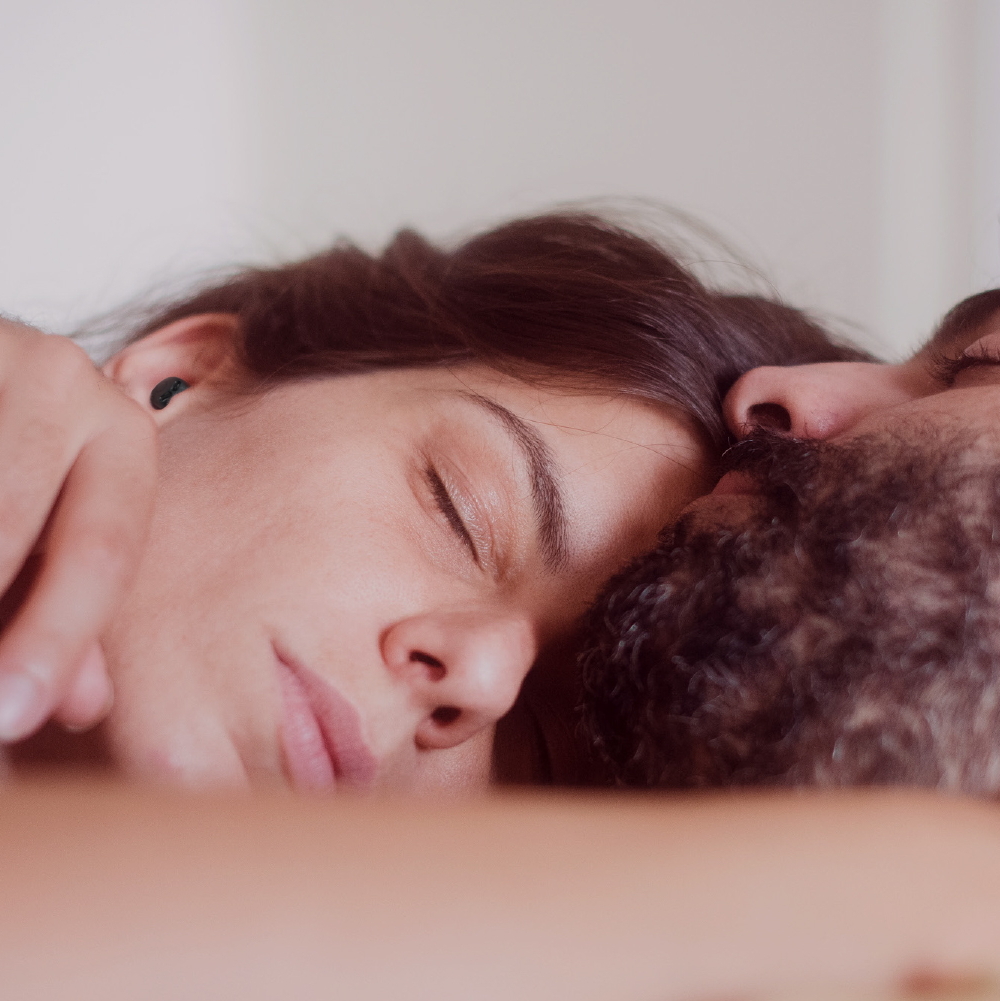
Why Most Earbuds Aren’t Designed for Sleep
Most noise-cancelling earbuds are built for commuting, calls, and music. They’re engineered for daytime use — not for 7–8 hours lying on your side in bed. The problems show up fast:
- Bulk and pressure: Standard earbuds protrude from the ear. On a pillow, they press inward and become painful within an hour.
- Bluetooth dependency: Most earbuds need a phone connection — notifications, dropped connections, and mandatory apps, none of which you want at 2am.
- Sound masking vs. real silence: Many ‘sleep earbuds’ work by playing white noise or ambient audio. This adds sound rather than removing it, keeping the brain stimulated.
- Battery life: Most wireless earbuds last 6–8 hours on a charge — barely enough for a full night, with no margin.
If your goal is genuine sleep improvement, these tradeoffs matter.
Understanding Noise Cancellation for Sleep
Active Noise Cancelling (ANC) works by detecting incoming sound and generating opposing waves to neutralise it. It works best on low-frequency, consistent sounds — exactly the type produced by snoring, traffic, HVAC systems, and urban background noise. Foam earplugs can block some sound passively, but they struggle with the low-frequency rumble of snoring. True ANC targets these frequencies directly.
There’s an important distinction worth understanding:
| Approach | What it does |
| Noise masking | Adds sound (white noise, music) to cover disturbance |
| Active noise cancelling | Reduces noise without adding anything |
For true rest, most people find silence more restorative than substituted sound.
What to Look for in Sleep Earbuds
1. Size and profile
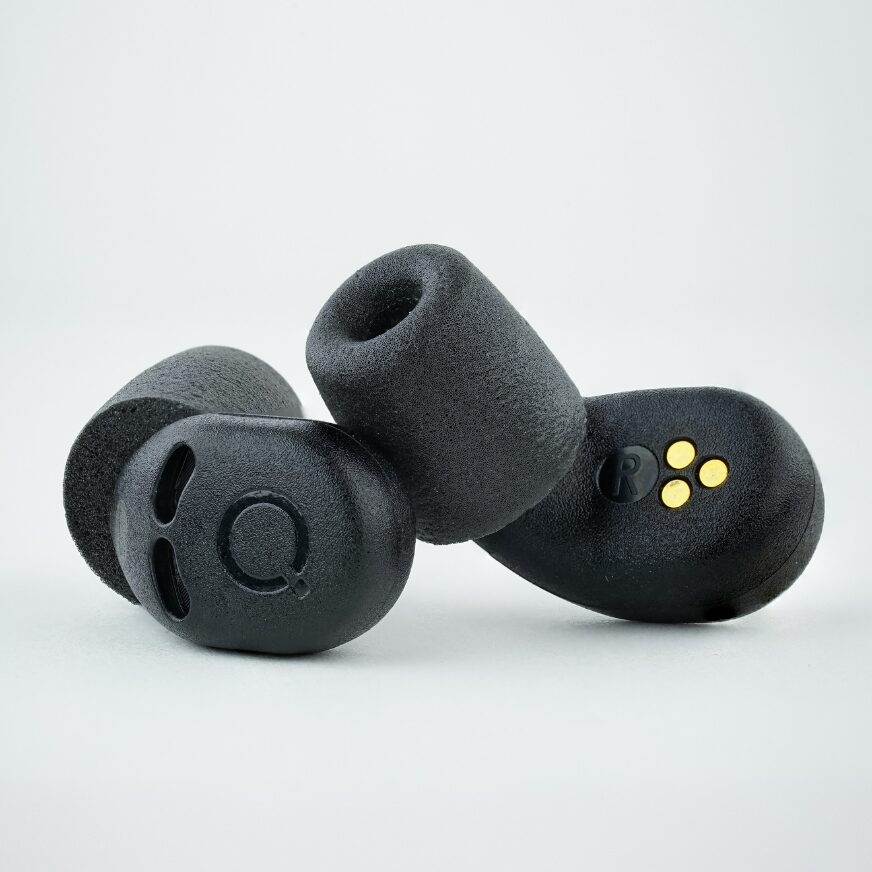
The most important factor for comfortable earbuds for sleeping is physical design. Look for a low-profile fit that sits flush with or inside the ear canal — no protruding stems or wings. This is especially critical for side sleepers, who need earbuds that are genuinely flat against the ear.
2. ANC performance on low frequencies
Not all ANC is equal. For sleep, you specifically want strong attenuation of low-frequency noise — snoring typically sits in the 100–500 Hz range. Standard earbuds are often optimised for mid-range frequencies rather than this lower register.
3. No Bluetooth required
For sleep, a Bluetooth connection is a liability. It introduces interruptions, requires a paired device nearby, and depends on an app running in the background. Sleep earbuds that operate independently are meaningfully simpler and more reliable.
4. Battery life for overnight use
Check the ANC-only battery life, not just playback hours. For sleep, you need reliable performance across 7–8 hours.
5. Comfort materials
Softer, smaller silicone tip options reduce in-ear pressure. Hard or oversized tips will become uncomfortable before morning.
Noise Cancelling Sleep Earbuds vs. Sleep Headphones
Sleep headphones (typically headband-style with flat speakers) offer a different tradeoff. They’re comfortable for back sleepers and good for playing audio, but most don’t use active noise cancellation — they rely on passive blocking and audio masking. For people who genuinely want to reduce noise rather than cover it, noise cancelling sleep earbuds will generally outperform sleep headphones.
What Sets QuietOn Apart
Most competitors rely on sound masking — playing white noise or ambient audio to distract from disturbance. QuietOn uses true active noise cancellation to eliminate noise at source, particularly low-frequency sounds like snoring and traffic that foam earplugs cannot touch. The result is genuine silence rather than substituted sound.
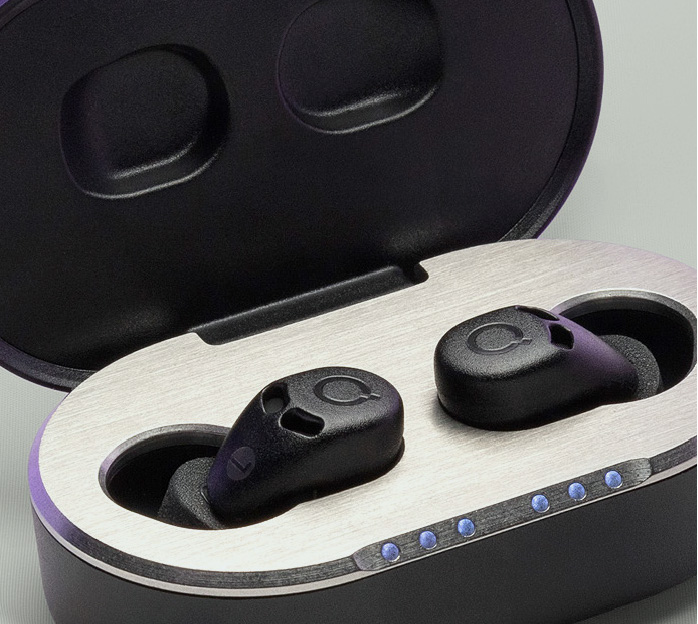
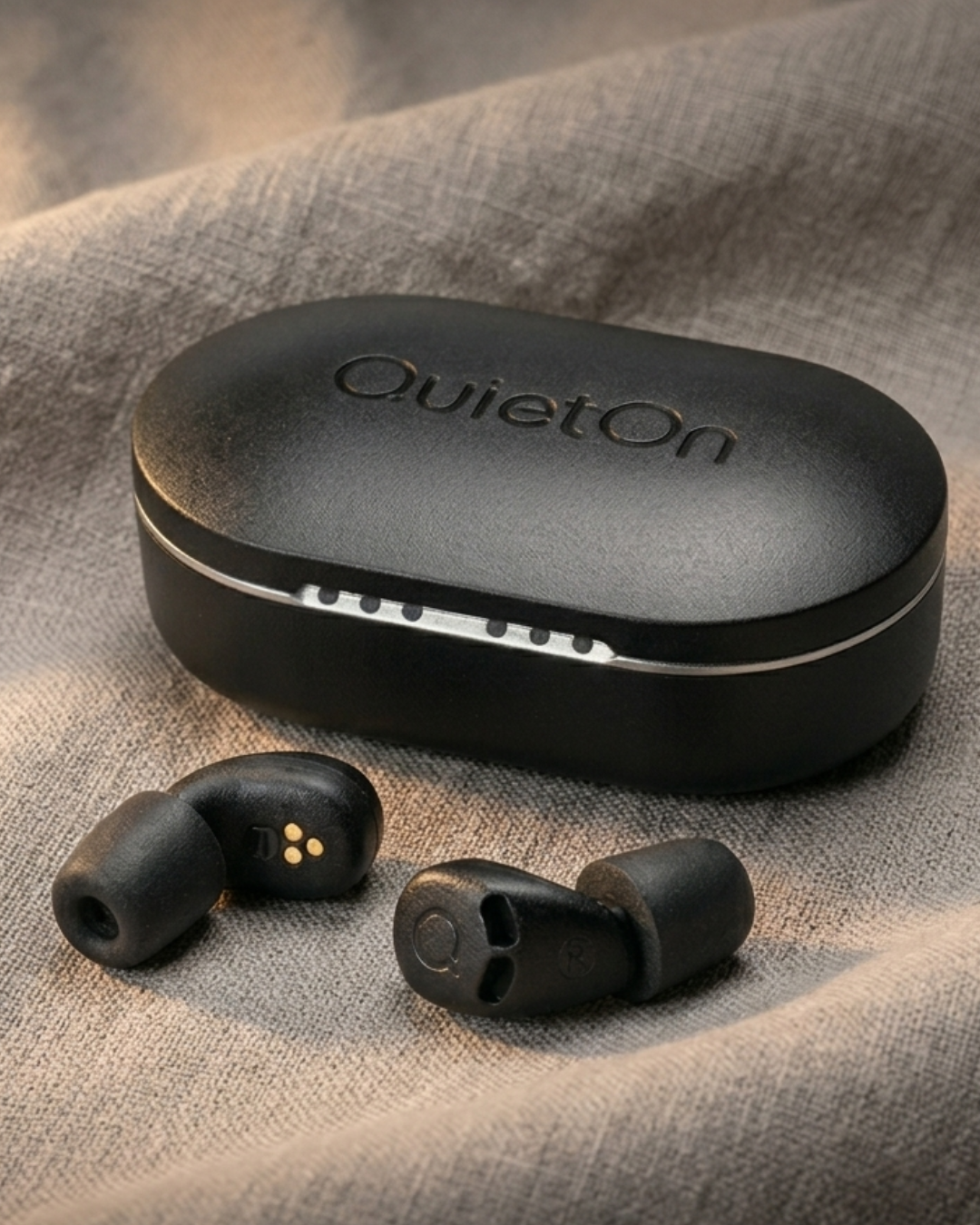
QuietOn 4 is the world’s smallest ANC sleep earbud — compact enough that it does not press against the pillow, making it the only viable option for many side sleepers. Unlike virtually all competitors, it requires no Bluetooth, no app, and no setup. You put them in, and they work.
QuietOn 4 is specifically built for:
- Sleeping next to a snoring partner
- Light sleepers disturbed by background noise
- Urban environments with persistent traffic or ambient sound
- Side sleepers who find conventional earbuds painful
The Bottom Line
Choosing the right noise-cancelling sleep earbuds comes down to a few honest questions: Do you want silence or sound? Are you a side sleeper? And do you actually need Bluetooth, or is that just adding complexity you don’t need at night? For most people seeking better sleep, the answers point toward a purpose-built solution — one designed around genuine noise reduction, physical comfort overnight, and nothing unnecessary in between.