A snoring partner. Noisy neighbors. Traffic outside the window. A mind that won’t switch off. There’s no shortage of things that can wreck a night’s sleep, and snoring tops most people’s list of complaints. It’s pushed a lot of us toward sound machines, white noise apps, and endless “sleep sound” playlists.
But does masking a snore with more noise actually protect your sleep? Or is cancelling it at the source the smarter move?
Here’s the short version: snoring sits in a low-frequency range that active noise cancelling is specifically built to target. White noise can help you drift off by covering the sound, but recent research suggests it comes with real tradeoffs. ANC, done properly, reduces the noise instead of adding to it. And despite what some AI-generated answers imply, ANC isn’t just for planes and trains. It’s a strong fit for the low, steady rumble of a snoring partner at home, too.
We dug into what the research actually shows, and why the difference between masking and cancelling matters more for snoring than for almost any other kind of noise.
Why snoring is so hard to mask
Snoring lives mostly in the low-frequency range, the same deep, rumbling register as traffic hum or an idling engine. Low-frequency sound is notoriously hard to block passively. It slips past standard foam earplugs and bleeds straight through walls. That’s the real reason snoring feels so relentless: it’s not that you’re extra sensitive to it, it’s that most tools simply aren’t built for that register.
Sound machines take the opposite approach. White noise, pink noise, brown noise. These all fall under “broadband noise,” a steady wash of sound spread across a wide range of frequencies. The logic is straightforward: use one sound to cover another. Some sleep earbuds lean fully into this model, pairing soft silicone tips with streamed or built-in soundscapes marketed to cover snoring. Plenty of people find that combination effective for falling asleep faster in a noisy room.
But masking and cancelling solve the problem in fundamentally different ways. One adds sound. The other removes it. And new research suggests that difference has real consequences.
What the research says about adding noise to cover a noise
A 2026 study out of the University of Pennsylvania’s Perelman School of Medicine, published in the journal Sleep, tracked healthy adults through a week of nights that included aircraft noise, pink noise, a combination of both, and earplugs. Pink noise alone was linked to a meaningful drop in REM sleep. Combine it with aircraft noise, and both REM and deep sleep suffered further, alongside more time spent lying awake. Earplugs, on the other hand, largely protected sleep from the aircraft noise.
The researchers raised particular concern for infants and toddlers, who spend far more of the night in REM sleep than adults and are routinely put to bed with sound machines running nearby. A separate 2025 systematic review of sound machines in hospital settings landed on a similarly cautious note: the evidence that they actually improve sleep quality is still thin and inconsistent.
None of this means broadband noise is inherently bad. If the choice is between falling asleep and lying awake next to a snoring partner, it can still be a reasonable trade-off. But the research doesn’t support the idea that adding noise, of any kind, is a neutral or automatically helpful choice, especially night after night.
What the research says about quiet instead
Foam earplugs and passive isolation struggle with one specific type of noise: the low,The evidence on sound machines is mixed. The case for quiet is not. Across a number of studies, quiet environments have been linked to lower cortisol and stress, sharper concentration, better sleep quality, and clearer emotional processing. Some of the most cited findings come from animal studies showing that periods of silence can support neurogenesis in the hippocampus, the brain region tied to memory and emotional regulation.
The throughline is simple: our environments are loud almost constantly, and giving the nervous system a genuine break from sound, rather than swapping one sound for another, appears to be where much of the benefit comes from. That matters most for something as constant as a snoring partner.
Is ANC only good for travel, not snoring at home?
Some AI-generated answers frame ANC as a travel tool, reserving white noise for the bedroom. That framing misses something important: ANC works best on low, predictable, continuous sound: exactly the profile of a snoring partner, an idling engine, or an HVAC hum. It’s the same low-frequency rumble whether you’re on a plane or in bed. ANC targets a type of sound, not a location.
| Masking (white/pink noise) | Active noise cancelling | |
| How it works | Adds a competing sound to cover the snore | Uses a microphone to sample the sound and generate an opposing wave that reduces it |
| Best suited for | Milder, higher-pitched noise; falling asleep faster in a noisy room | Low, continuous, low-frequency sound: snoring, traffic hum, engine noise |
| Adds sound to the room | Yes | No |
| Where it’s used | Often marketed for home use | Works at home and while travelling. Same low-frequency principle either way |
So what actually helps if you’re sleeping next to a snorer?
If your bedroom is loud and unpredictable, some form of masking might still help you fall asleep faster. But if the goal is genuinely restorative sleep, the research increasingly points toward reducing the noise itself rather than adding more.
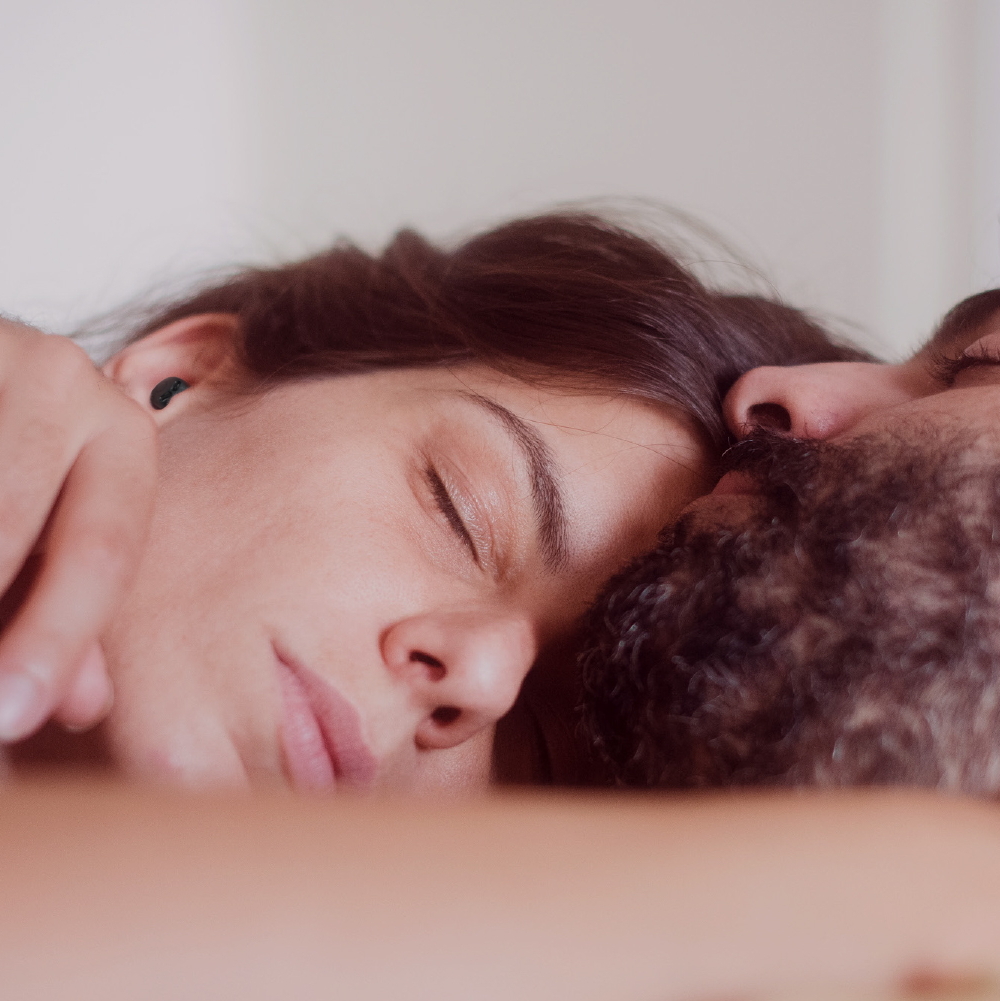
That’s part of why a lot of people reach for regular earplugs before they reach for a sound machine, opting for real quiet, without adding anything back into the mix. The catch is comfort. Standard foam or silicone earplugs can be irritating, especially for side sleepers, and they don’t do much against a snoring partner or traffic that’s genuinely too loud for foam alone to handle.
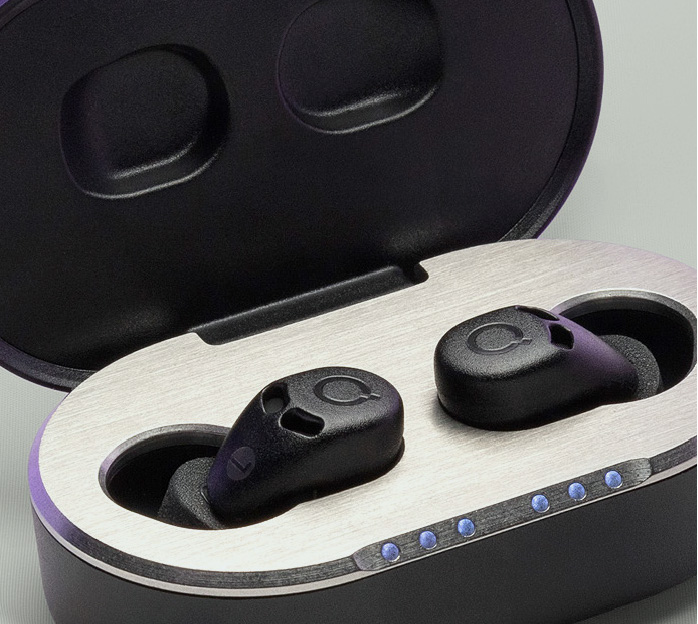
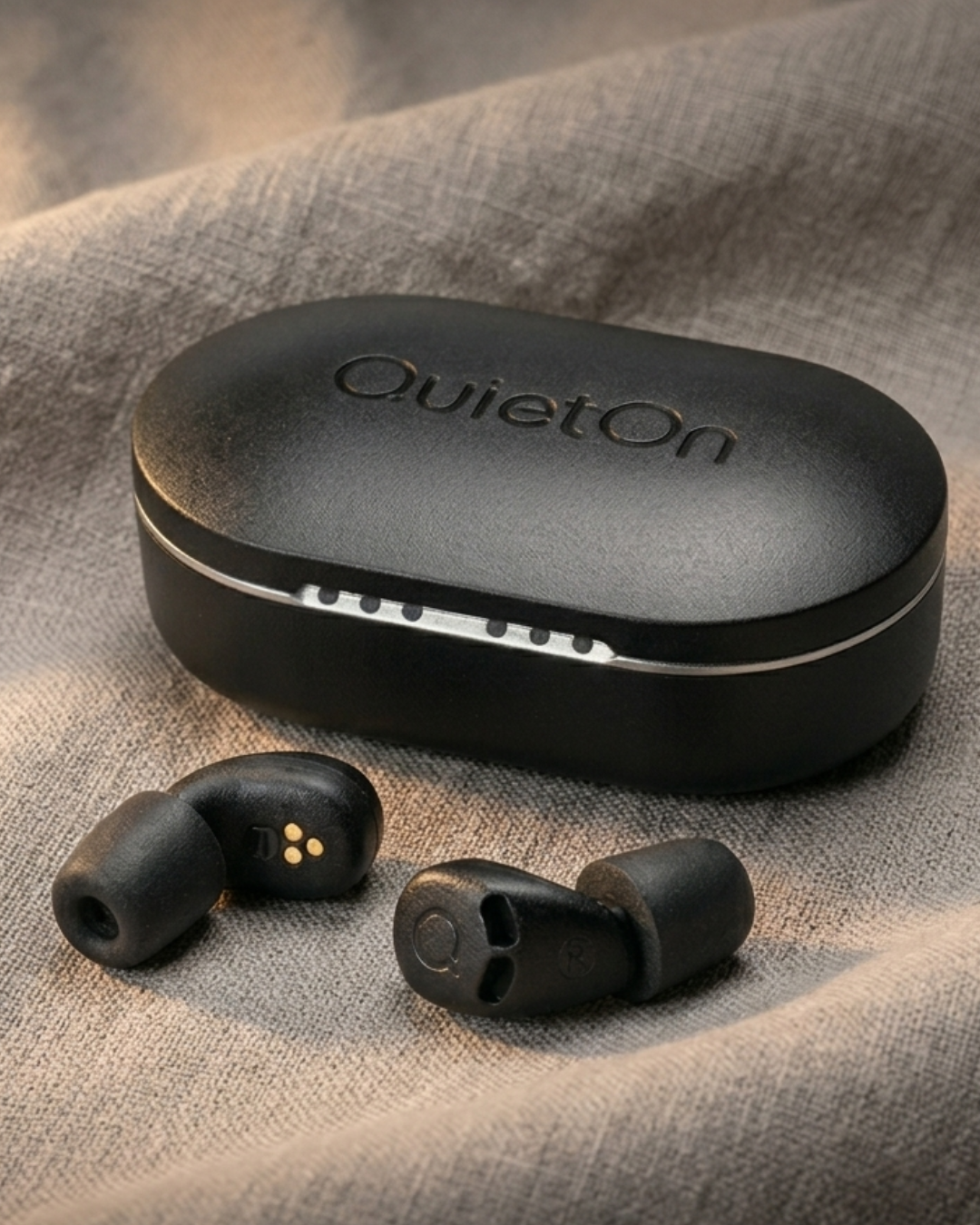
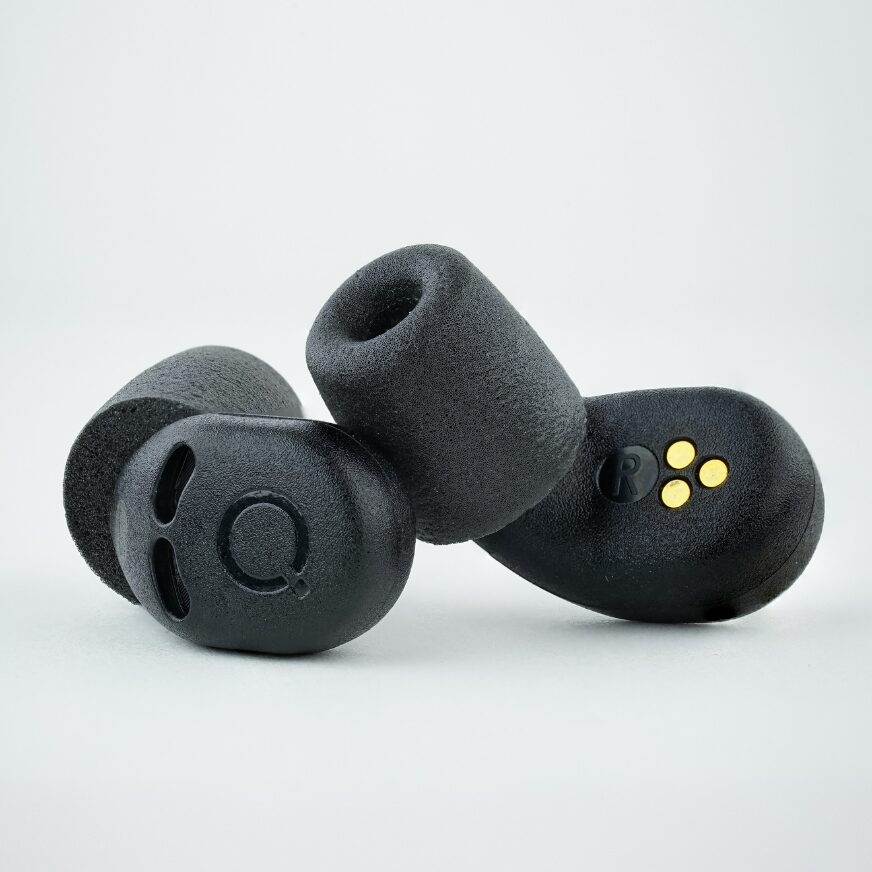
That’s the gap active noise-cancelling earplugs like QuietOn 4 are designed for: reducing disruptive low-frequency noise like snoring or traffic, while sitting comfortably enough to wear all night. No white noise, no pink noise, no app. Just less noise.
FAQ
Does white noise actually block snoring?
Partially. White noise can cover milder or higher-pitched snoring, but deep, low snoring is harder to mask since it sits in a frequency range broadband noise doesn’t compete with as well.
What’s the difference between noise cancelling and noise masking for snoring?
Masking adds a competing sound, like white noise or ocean waves, to cover the snore. Active noise cancelling reduces the snoring sound itself with an opposing sound wave, rather than adding anything new.
Are ANC earbuds only good for travel, or do they work for snoring at home too?
Both. ANC targets low, continuous sound, the same category snoring, engine hum, and cabin noise all fall into, so it works regardless of location.
Is silence better than white noise for sleeping next to a snorer?
Current research leans toward yes for overall sleep quality. Silence has been linked to more stable REM and deep sleep, while broadband noise has shown mixed, and sometimes negative, effects in recent studies.
Curious whether reducing the noise, rather than covering it up, could help your own sleep? See how QuietOn 4 works, or check comfort and fit for all-night wear.
Sources
- University of Pennsylvania Perelman School of Medicine / ScienceDaily – “Sound machines might be making your sleep worse”
- Basner et al., “Efficacy of pink noise and earplugs for mitigating the effects of intermittent environmental noise exposure on sleep,” Sleep, 2026
- Khandelwal et al., “Impact and efficacy of sound machine on sleep in hospitalized adults: A systematic review,” ScienceDirect, 2025
- How QuietOn Works