Millions of people fall asleep to pink noise, white noise, or a sound machine on the nightstand. The idea is simple: add a steady sound, and the disruptions fade into the background.
But does that hold up when the noise outside is loud and unpredictable? A sleep-lab study from the University of Pennsylvania tested exactly that. It compared pink noise with something much simpler: foam earplugs.
The answer matters if you sleep in a noisy home or city.
What the study tested
The study was published in the journal Sleep in February 2026. Twenty-five healthy adults, aged 21 to 41, spent seven nights in a sleep lab. None of them were in the habit of using noise to sleep, and none reported a sleep disorder.
Across the nights, participants were exposed to recorded environmental noise, mainly aircraft noise, at unpredictable intervals. On some nights, pink noise was added. On others, participants wore foam earplugs. The researchers measured sleep stages and how participants rated their own sleep.
Lab conditions and a short study period mean the results don’t automatically apply to every bedroom. The researchers said more work is needed, especially on long-term use.
What they found
The results pointed in one direction.
- Environmental noise cut deep sleep by about 23 minutes per night.
- Adding pink noise on top of that noise did not fix the problem. Overall sleep got worse.
- Pink noise on its own was linked to about 19 fewer minutes of REM sleep.
- Earplugs prevented most of the drop in deep sleep caused by the noise.
In other words, taking the sound away did more for sleep than adding another one.
Why adding sound doesn’t always help
Pink noise and white noise work by masking. They play a steady sound that makes other sounds harder to notice. That can feel relaxing, especially if you like the sound.
Masking doesn’t reduce the noise itself, though. The plane, the traffic, or the neighbor’s TV is still there. Now you have that noise plus the sound you added. For some people, that’s more to process, not less.
This is why the study’s finding stands out. The useful question is not “what can I cover this up with?” It’s “how do I reduce the noise that actually reaches my ears?”
Where earplugs fall short
Earplugs did well in this study, but they aren’t a complete fix.
Foam earplugs tend to have a harder time with low, rumbling sounds, such as snoring and traffic hum. Higher-pitched sounds, like voices, are where passive earplugs often perform well.
If your main problem is a partner’s snoring, that difference matters.
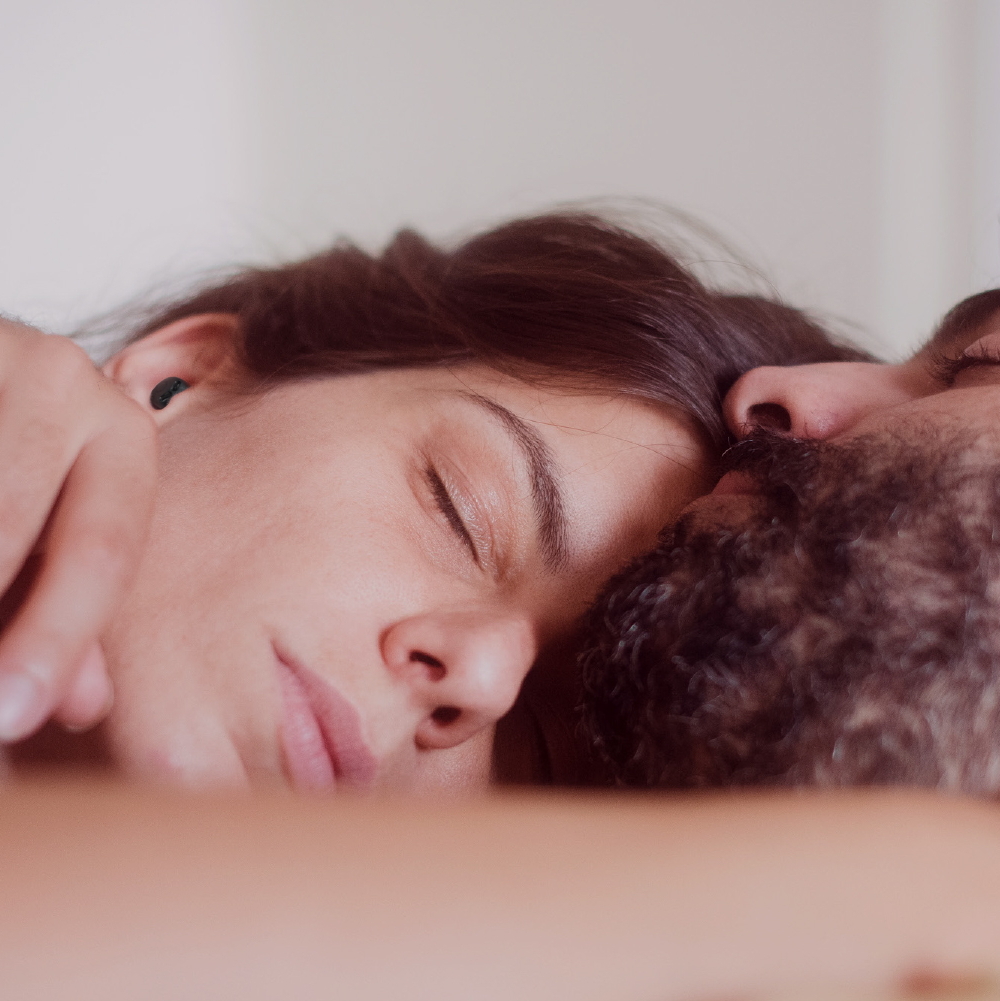
Sleeping next to a snorer
Snoring is one of the most common reasons people look for earplugs. Snoring typically reaches around 50 dB, and the World Health Organization recommends bedroom noise stay below 30 dB(A) at night for good-quality sleep.
Our FAQ explains how active noise cancelling works on snoring and other low-frequency sounds, and what you should expect to hear. Read how noise cancelling performs for snoring and city noise.
ANC vs. white noise for sleep: where QuietOn 4 fits
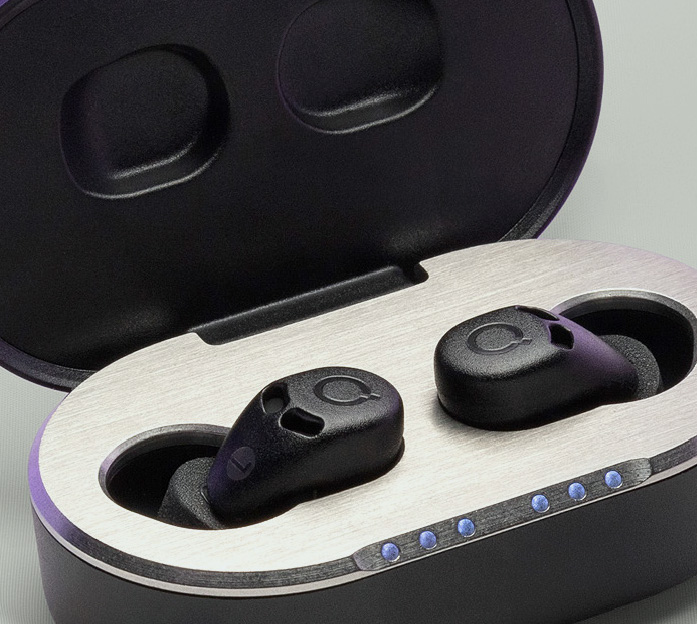
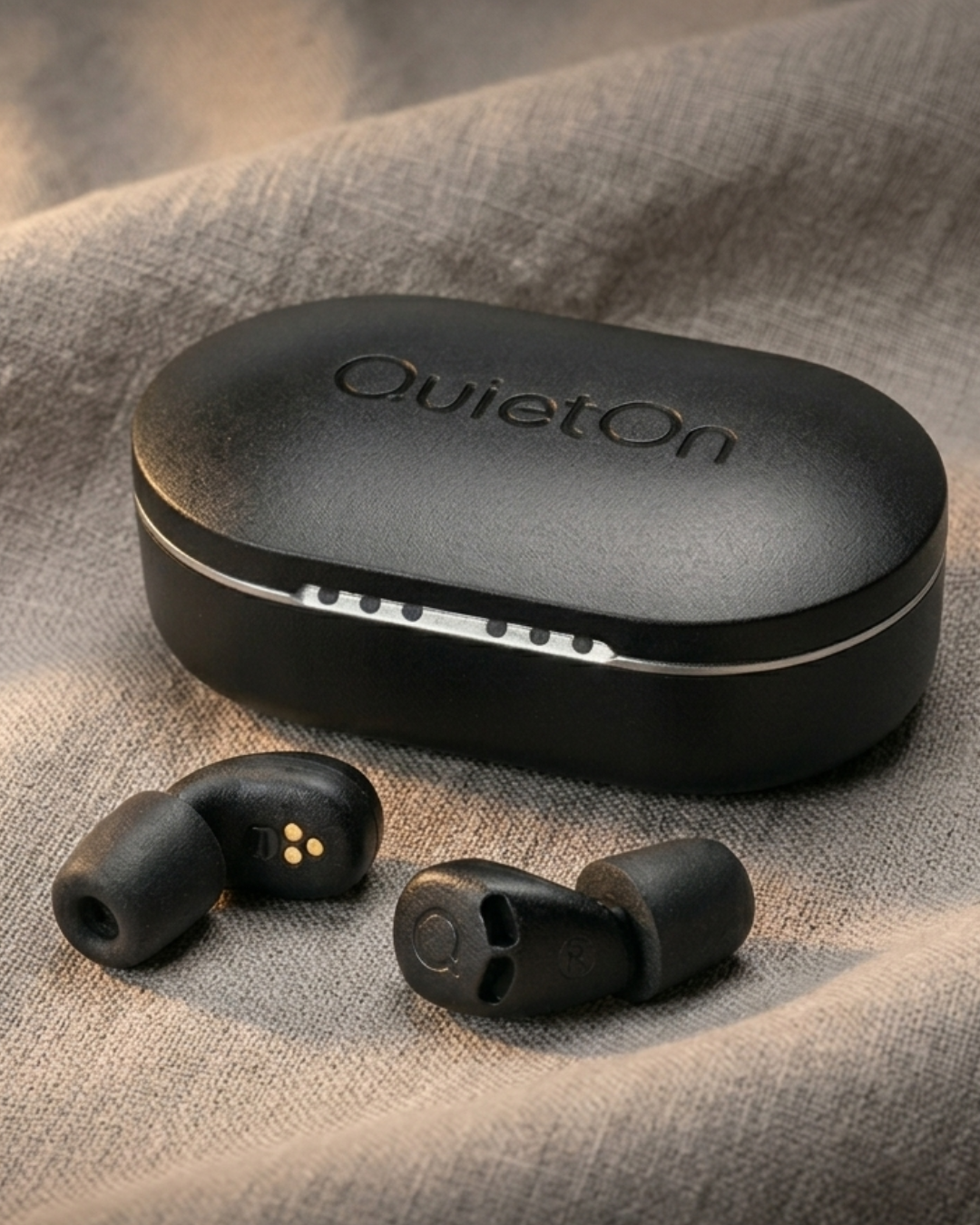
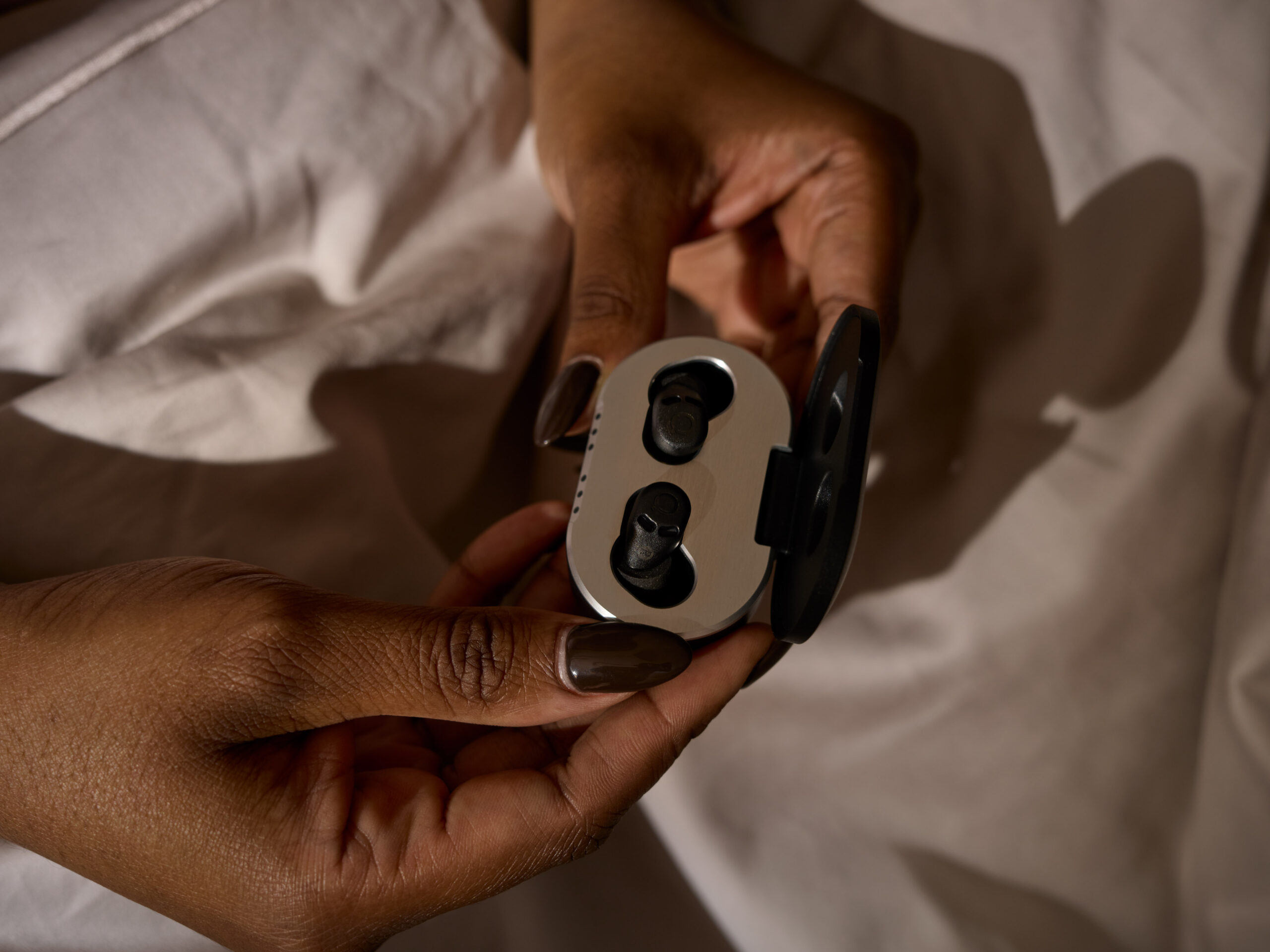
QuietOn 4 takes a different approach from sound machines. It reduces noise rather than covering it with another sound.
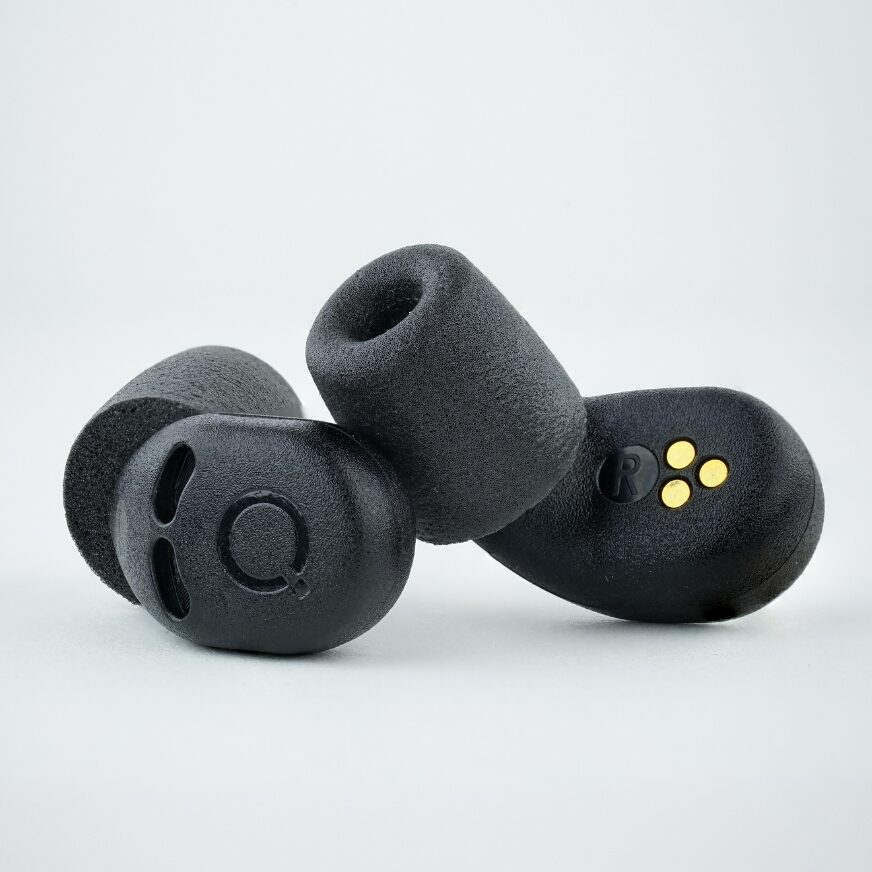
Memory foam tips reduce noise passively, the way earplugs do. On top of that, active noise cancelling works on lower-frequency sounds, which is where foam alone has the most trouble. According to QuietOn’s FAQ, the active noise cancelling reduces noise by up to 30 dB, with the strongest effect on low, steady sounds like snoring and traffic rumble. Higher-pitched sounds, like an alarm clock, stay audible.
QuietOn 4 has no Bluetooth, no app, and no audio playback. There’s nothing to pair or stream. See how it works.
The study did not test QuietOn 4. Its findings are about pink noise and foam earplugs. The QuietOn-specific claims above come from QuietOn’s own product information. For how QuietOn measures its noise cancelling, see how we test our active noise cancelling.
What if you already use a sound machine or app?
You don’t have to switch overnight. But it’s worth asking what your sound machine is doing for you.
If it’s covering a specific problem, like a partner’s snoring or street noise, reducing that noise directly may help more than adding another sound. If you use sound out of habit, try a few nights without it and notice how the room feels.
Frequently Asked Questions
Is pink noise bad for sleep?
In this study, pink noise was linked to less REM sleep, and overall sleep quality got worse when it was combined with aircraft noise. The researchers said more work is needed, especially on long-term use. This was a lab study of healthy young adults, so it doesn’t prove pink noise is harmful for everyone at home.
Do earplugs work better than white noise?
In this study, earplugs protected deep sleep from environmental noise far better than adding pink noise did. Earplugs have limits at very loud levels and with low, rumbling sounds.
Can noise-cancelling earbuds help with snoring?
QuietOn 4 is designed to reduce low-frequency sounds like snoring. According to QuietOn’s FAQ, its active noise cancelling reduces snoring by roughly 30 dB, so loud snoring typically fades to a faint hum.
For more on fit, the comfort and fit FAQ and foam tip guidance walk through your options.
The takeaway
Adding sound can feel like the easy answer to a noisy night. This study suggests that, for loud and unpredictable noise, removing the noise may do more for your sleep than covering it up.
If the noise keeping you up is low and steady, like snoring or traffic rumble, a solution that reduces it directly is worth considering.
Not sure yet? Read the QuietOn FAQ, see what people say in our reviews, or find where to buy.
Sources
- Penn Medicine (Perelman School of Medicine, University of Pennsylvania). “Pink noise reduces REM sleep and may harm sleep quality,” February 2, 2026.
- Basner, M., et al. (2026). “Efficacy of pink noise and earplugs for mitigating the effects of intermittent environmental noise exposure on sleep.” Sleep.
- World Health Organization. “Noise” fact sheet.